5 years of testing, researching, and gathering feedback from thousands has led to the only trusted & complete list of dorm room product recommendations. Highly rated, non-toxic, and built to use throughout college.
Looking for in-stock mini-fridge shelving? Click HERE!
Our job, every day, all year long, is to research, test, and find the best quality, most affordable items for dorm rooms and college life. We focus on quality, affordable items that are practical, non-toxic, and will hold up through every housing change during college. Our goal is to keep students comfortable, safe, and healthy without overspending or over-decorating.
There are hundreds of items in this list (to account for every situation), but you only need a fraction of them. When it comes to setting up a dorm room, less is more. Please know that every school provides different furniture, rooms have different layouts, and each dorm has very different rules.
2026 marks our 5th year, and this guide is built from constant testing in our own home dorm lab and the continuous feedback loop from tens of thousands in our very helpful Facebook group.
We've tested, tracked prices, and crowd-sourced feedback on thousands of dorm essentials, but to earn a spot in this guide, they must meet our standards.
4.5+ stars, 1,000+ reviews. 95% of this list meets that bar. The few exceptions are noted — usually due to availability or a product category where options are limited.
Certified non-toxic textiles and kitchen items. All bedding, towels, and linens must be certified non-toxic. Many imports are unregulated, and we don't recommend those, period. Cookware must be PFAS-, PFOA-, lead-, and cadmium-free. Plastics must be BPA-free.
Community-tested. Personally tested by us, or vetted through years of real feedback from our 160K-member Dorm Shopping Recommendations Facebook group.
Built for beyond the dorm. Dorm life is usually a year or two, but apartments, houses, and post-grad living follow. We choose items that can work for every housing situation, where possible.
Made in USA when available. We prioritize domestic manufacturing wherever it exists. Not always possible, but always the first thing we look for.
Three ways to find exactly what you need.
Dorm air quality is one of the biggest complaints we see year after year. Temperatures tend to be on the too-warm side (although some are kept very cold to inhibit mold growth). Beyond temperature struggles, air quality is almost always an issue. Nagging cold symptoms for weeks that don’t respond to medication are usually linked back to mold exposure, often coming through air vents. Germs are also abundant in these crowded, close quarters.
Old buildings with poor air ventilation are a primary culprit for the fall freshman ‘flu’. Nagging coughs and bad cold symptoms that won’t go away may come from exposure to germs or to mold. Add in smells from various dorm kitchen meals and burnt popcorn, and air purifiers become the solution for all of these situations.
Dorms either have community or shared, private bathrooms. The type you are assigned will require a completely different setup. Wait for your dorm assignment and details to purchase most items. Towels, bathrobes, and slippers can be purchased at any time.
Dorm rooms have little airflow and are often older, damp, and musty — a difficult environment for drying towels, especially with limited places to hang them. We tested quick-dry options specifically for this problem.
Build your bed in layers: encasement first (optional), then topper, then sheets, then blanket, and comforter. Many dorms have Twin XL beds — always confirm before ordering.
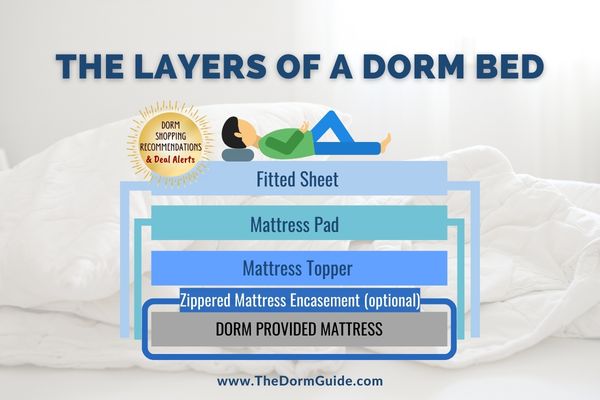
Every recommendation in this section is highly rated, affordable, and certified toxin-free (CertiPUR-US® for foam, OEKO-TEX® for textiles). Links will take you to Twin XL, the most common size, but we see many Twin, Full, and Full XL in dorms each year, so please confirm your bed size before ordering.
From backpacks and campus essentials to clear bags for game day, these are the items students use all year long to stay prepared for whatever's on the schedule.
If you're taking a car to school, a few safety items are worth having on hand before something goes wrong, not after.
A cramped dorm room is SO much nicer when it is clean! Not to mention that pests are notorious in dorms, so don't give them a reason to visit your room!
Maximize every inch of closet space with smart hanging systems, over-door organizers, and other accessories to cleverly use every last bit of that small closet. Dorm closet styles range from large, open spaces to small, closed-door closets to wardrobe units with no long-hanging space. It is important to know your closet type before planning the space.
Before shopping for dorm room decor, pay special attention to your dorm's rules. Are rugs permitted? Curtains? How are you permitted to hang wall decor? Please leave the shag rugs and candles at home — read on to learn more!
Most dorms provide a basic desk and desk chair. A few include a desk hutch. Desks are multifunctional in a dorm room - they are used as a study area, a dining table, and a vanity space. Planning for your desk involves understanding your desk width and drawer/storage situation.
Charging, laptops, tablets, phone accessories, audio, TVs - there is a lot to consider in this category. Of course, not all of it is needed - every student is different!
The one line item that varies the most across campuses in the United States is powering your dorm room. Most schools do not allow extension cords or non-surge-protected power strips. Those surge protected strips? Your rules could include a required electrical certification (UL-Listed or ETL-Listed), a minimum number of joules, a maximum number of outlets, a maximum cord length, a required on/off switch, and some lately (hello Syracuse) require a built-in fuse circuit breaker. And yes, RAs are required to check that everything you bring into the dorm meets requirements..
Check your school's rules before buying any furniture. Some schools do not allow any outside furniture, and some have restrictions about charging furniture, fabric, drawers, or seating. Most schools require all school-provided pieces to stay in the room, so you can't remove the provided desk chair or mattress.
If your dorm allows outside furniture, you may consider ottomans that double as step stools and extra storage, tall nightstands next to captain-height beds, or a variety of seating if you have room.
A few preventative measures can go a long way toward improving health and safety in the dorm room and on campus.
If your student won't have easy access to a drugstore near campus, a stocked first aid kit at move-in covers the inevitable colds, flu, and minor injuries of the school year.
There are many ways to store jewelry in a dorm room. Where you store yours comes down to where you have room (Closet? Desk? Wardrobe Unit? Inside a lock box?) — the goal is a specific place for everything, so nothing gets lost or misplaced or casually picked up by a passerby or visitor.
The right hamper depends entirely on how far the laundry room actually is — decide that first, then pick the style.
Most dorm rooms have harsh fluorescent lighting. Many students choose to bring other lighting for the room either for task lighting, ambient lighting or both!
Even with an unlimited meal plan, students won't eat every meal and snack in the dining hall. Snacks, late-night noodles, and quick meals still need a few smart tools when there's no stove or counter space to work with. Before purchasing any appliances for your dorm room, please check the rules and restrictions for your particular dorm building. Some dorm room essentials are just not allowed or schools may require students to rent microwaves and/or refrigerators.
Move-in day is exciting, emotional, and often a little chaotic, but having the right supplies can make the entire process much smoother. This section includes our favorite packing and move-in essentials, from our favorite moving bags and carts to what to pack so that you can hang decor in their room to make it a bit more homey.
Academic planning matters as much as room setup — the right planner, whether paper or digital, will go a long way toward staying organized and on top of things.
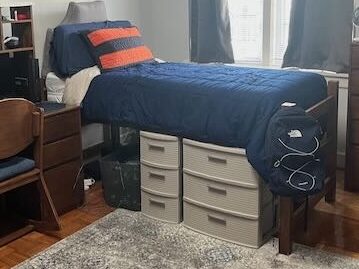
Traditional double dorm rooms average around 150-225 sqft. That's about the size of a good-sized bedroom or a small living room, but with 2 people sharing this space as bedroom, closet, desk, dining area, and vanity, creative storage is a must.
There are 4 key ways to maximize storage:
Go bigger than you think you need. Some dorms provide trash cans, but they are often smaller than a standard kitchen trash can. I recommend kitchen-sized trash cans to reduce the number of trips to the dumpster and to keep things tidy. It’s amazing how trash can pile up! Some dorms provide recycling bins.
The right bags and organizers make travel easier whether it’s trips home or weekend trips for clubs, with friends or Greek life.
Organization is the key with all of this gear, whether you have a communal bathroom or a shared private bath. In either case, you’ll likely end up doing hair & makeup at the dorm desk. Everything needs a home so morning routines don't leave chaos that makes it impossible to study later.