UPDATED: January 2026
It is easy to get caught up in shopping for the fun stuff – dorm room decor, storage ideas, dorm bedding and laptops for college, but make sure to also consider dorm room safety and safety on campus as you prepare to head off to college. Our Dorm Shopping Recommendations Facebook group has all of the tested, non-toxic recommendations for your dorm room, and this article on safety was created from community suggestions in that group as well as our own experience and research.
We’ve broken down our recommended safety measures and tools into 4 categories:
Read on to learn our 25 must-consider ideas, and be sure you are sending your college student to school with safety in mind.

This is #1 for a reason. Put simply, when walking at night or in lesser-traveled areas on campus, ALWAYS walk with a buddy or a group. Avoid closed stairwells when elevators are available or take a buddy if you use the stairs. NEVER leave an evening club meeting, restaurant, bar or fraternity party alone and NEVER leave a friend alone. This goes for weekend outings and spring break trips as well.
And while it’s best to always walk or run with a friend or group, ALWAYS let someone know where you are going if you are heading out alone.
All colleges and universities want their students to be safe, and it is probably safe to say that all schools offer a phone or text line to arrange an escort or a ride back to your dorm. Before you even arrive for move-in, add Campus Security’s contact information to your phone as a Favorite. Suggest that your roommate and friends do the same.
Check for a campus security app as well and know where emergency phones are located around campus, usually indicated with blue lights.
Also know how to use the emergency dial feature on your phone. For iPhones –simultaneously press and hold the side button and either volume button until the sliders appear and the countdown on Emergency SOS ends, then release the buttons. Or you can enable iPhone to start Emergency SOS when you quickly press the side button five times. If you have a different type of device, search for safety features your phone has, become familiar with them and update the settings on your phone as needed.
She’s Birdie is a personal alarm that attaches to a keychain, backpack or school lanyard.
The She’s Birdie Personal Alarm is a 130-decibel keychain safety alarm with a flashing strobe light. I have one on my keychain and carry it in my hand if I’m walking to my car at night or just feeling a bit uneasy.
This new 3.0 version is now USB-C rechargeable, too.
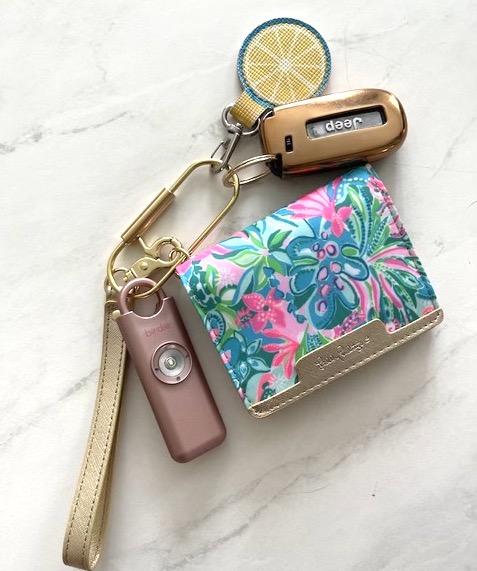
Location, location, location. There are many ways to share your location with trusted friends and family. In addition to the Birdie+ above, students should also consider creating a friend circle on Life360 or sharing their location (with trusted friends ONLY) on Snap Maps in Snapchat.
Going somewhere alone? Always let a friend know where you’ll be.
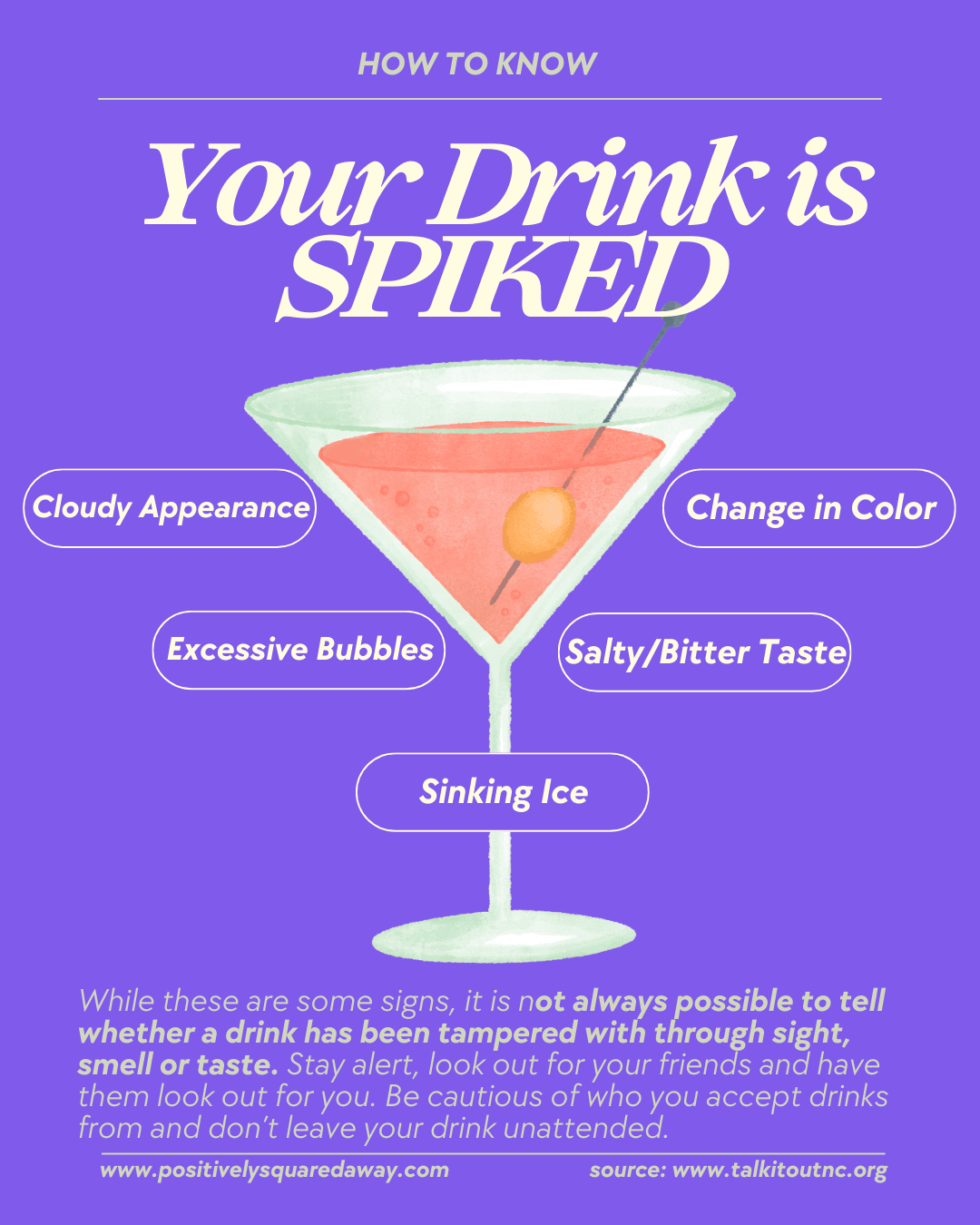
Let’s face it, college kids are going to go to parties, bars, tailgates and concerts. And whether they are drinking a Coke or a Rum and Coke, they need to keep an eye on their drink at all times. In a recent study, it was reported that nearly 8% of college students have had a drink spiked, with 80% of those being female.
This clever stretchy drink cover can easily go with you on a night out as it is kept wrapped up in a hair scrunchie. Use this to keep your drinks covered in crowded places.
For safety purposes, everyone should have a well-charged cell phone AT ALL TIMES but especially in the evenings. If possible, carry a lightweight portable charger (aka charging block, charging brick, charging bank, power bank). If you search for one online, you’ll find hundreds of options and may be inclined to go with the least expensive, but familiarize yourself with the specs below before making a selection.
Portable battery chargers are measured in mAh (milliamp hours). mAh directly relate to both price and weight. The lower the mAh, the lighter and less expensive the charger. Higher mAh charging devices are typically heavier and more expensive. But more mAh means more charging time and power.

You’ll want to have a portable charger that will fully charge your phone at least once and quickly. Most iPhone batteries are between 2500 and 4500 mAh (the Pro Max’s being at the high end), and to fully charge your phone, your portable charger needs to be at least as many mAh as your phone for one full charge.
iPads take considerably more mAh, in the 7500-10,000+ range.
So if a college student needs to be able to fully charge a phone and an iPad, the portable charger will probably need to be at least 15,000 mAh.
| Charger | mAh | Weight | Features | Good For |
| Anker Portable Charger | 10,000 | 8oz | 2 modes - one faster for phones, one 'trickle-charge' for other devices such as headphones and watches. Travel pouch included. | Lower cost and lightweight with 10k power. You'll need to bring your own charging cables for your phone and accessories. |
| INIU Portable Charger | 10,000 | 7oz | Slimmest option & also offers USB-C out. LED display shows remaining power. No travel pouch or case. | This lightweight, fast charging model is good not only for the backpack but also small enough to keep in a clutch for non-classroom outings. |
| Anker Portable Charger With Built-In USB-C Cable | 10,000 | 7.5oz | Awesome little charger with the attached USB-C cable to charge it or charge your phone. | Those who would forget to bring a charging cord or who want to charge a USB-C and other device at the same time. |
| INIU Portable Charger 20,000mAh | 20,000 | 12.8oz | 2 outputs and the power to charge a phone and tablet simultaneously, LED display lets you know how much charging power remains, travel pouch. | Charging iPads or other tablets. Knowing how much charging power is left helps as a reminder to charge the charger and keep it charged. |
| Anker Power Core | 26,800 | 14oz | 3 outputs (all USB ports) to charge multiple devices simultaneously, travel pouch. | Great for someone who may not remember to regularly charge this charger. It should fully charge most phones over 6 times without needing to be recharged. |
You may be tempted to choose a solar charger, but they recharge slowly and are not recommended for those with regular access to power outlets. These are better suited for outdoor enthusiasts who won’t have access to power to keep their phones charged.
If you choose a charging block without built-in cables, don’t forget to keep a short charging cable in your bag as well if your charging block does not have built-in cables. Maybe a couple of cables in case your friend next to you in Biology class needs a charge as well. Most of these charging blocks have multiple output ports. Pack of 3 1-ft long Apple Lightning cables or Pack of 3 1-ft long USB-C cables for iPhones 15 and higher or most Android phones.
Something to consider for everyone in the family, but especially those heading off to college, is enrolling in self-defense classes.
Where can you find self-defense classes? Check the following options where you may be able to find them free of charge.
If these options don’t pan out, post in a local Facebook or Next Door group and ask for recommendations.
Ride-sharing services will likely be a part of most college experiences. Even if you bring a car to campus, there will be times when a ride share will be the safest or most efficient option.
Before leaving for college, students should consider installing both the Uber and Lyft apps and setting them up with a credit card so that they are ready to use them should the need arise.
Personally, I put my credit card on my sons’ apps because if they need to use Uber or Lyft, I want them to do so without the hesitation of a poor college student. We use a no-questions-asked policy, just take the Uber or Lyft.

To learn more about how these companies are enforcing safety during their rides, please review Uber’s Ride Safety Content and Lyft’s Safety page. In addition, Lyft has created campus partnerships with over 100 colleges to provide college-specific and discounted ride opportunities for students. See if your campus is on the Lyft partnership list.
Another good option, check to see what free safe-ride options your school might have. Several universities have student-run ride services that they can use as well! A great example is the University of Georgia has Designated Dawgs, a program ‘by UGA students for UGA students’ that boasts safe rides from downtown and campus. At the University of South Carolina, Safe Rides operates via Group Me and offers female USC students rides from other USC female students. Check your college website or social media accounts to find what options may be available at your school.
This may seem obvious, but much of the theft on college campuses occurs when rooms are left unlocked. Theft happens quickly, and just leaving the door unlocked while you go down the hall to the bathroom or to quickly catch up with a friend is all the time it takes.
Keep your dorm room door locked at all times. And same with the windows – keep them locked, even if you’re not on the ground floor.
If you’ll have small cooking appliances in your room, consider keeping an easy to use fire blanket handy. If they have a full kitchen in a suite-style dorm or off-campus residence, make this a mandatory!
Regarding carbon monoxide – yes, your college should have detectors in all college buildings, but are they operational in a power outage? Are they regularly checked for proper functioning? Power outages can lead to leaky mechanical equipment when fans and exhaust systems don’t have power. Give yourself peace of mind and have your student plug one of these easy-to-read LED carbon monoxide detectors with battery backup in their room.
If your student is living in off-campus housing, I would definitely place a carbon monoxide detector in the main living area near the kitchen.

Still not sure? Take a minute to read this article about a November 2021 carbon monoxide leak in a Miami University of Ohio dorm.
You’ve probably considered extension cords, power strips and charging stations. The only one of these that will protect your electronic devices from an electrical surge are those with surge protection. You may think that all power strips are surge protected, but that is not the case.
Many colleges ONLY allow surge-protected and UL Listed electronics in their residence halls. No extension cords and no power strips (without surge protection). Some have further requirements related to having an on/off button, a maximum number of outlets, maximum cord length, minimum amount of joules protection and more. Please check with your school and your specific dorm rules.
This pair of surge protectors is GE brand, UL Listed, have 6 outlets each, and they have the flat plug which is important in a dorm room to fit behind furniture which is typically where you’ll find your outlets. You don’t want a protruding plug to unnecessarily push your bed or desk further from the wall if you don’t have to!
Having a place to lock up valuable items, prescription meds and even your favorite snacks is an important part of dorm safety. This has nothing to do with not trusting your roommate, but consider that your roommate may have new friends stop by that are not known entities yet, or your door could be propped open for a hall gathering, or several other potential scenarios. It just makes sense to protect your belongings.
See our Dorm IQ article for more on the best options for a dorm safe, with more tips on how to keep medications and valuables safe in your dorm or apartment.
When you sign the housing contract, you’ll find a long list of ‘damages you may be charged for’, so be sure to protect the room’s surfaces appropriately. For hot hair tools or a clothes steamer (does anyone even iron anymore??), an inexpensive heat mat will do the trick.
For multiple hair tools and a it more organization, this hair tool organizer will keep them both organized and safely stored away when still hot.
A dorm renter’s insurance policy is typically very inexpensive, as little as $5-10/month. Losing your laptop or phone is painful; having to buy another one is even more painful. Keep your receipts for all valuables, take pictures of them in your dorm on move-in day, and document their serial numbers in the event you need to file a claim. Put all of this together in one digital file kept in the cloud or on a 3rd party service such as Dropbox.
If you have a homeowner’s insurance policy, check to see if it may cover your child’s belongings while in college. However, even if it will cover your student, keep in mind that a dorm room claim may impact your entire homeowner’s policy rates.
Everything is a little bit easier after a good night’s sleep. Studying, exercising, eating right, and even staying alert to your surroundings all come more easily when you’re alert and awake and suffer when you’re exhausted. Unfortunately, college students are often not the best slept people!
Students who manage their time well and keep study loads balanced will find it easier to get to bed at a decent time and not feel obliged to all-night cram sessions.
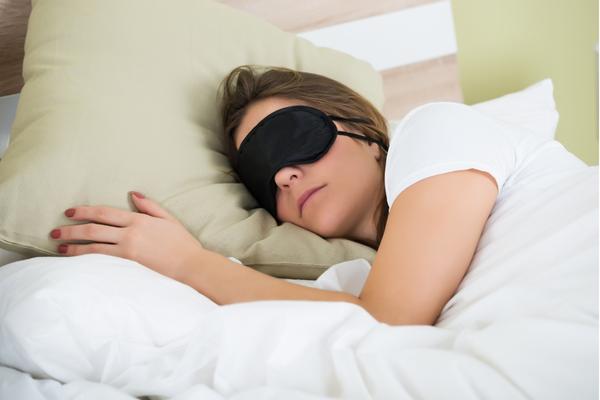
Another factor in restful sleep is how well you match with your roommate’s sleep habits. Be sure to take your time filling out roommate surveys and deciding who you will have for a roommate. A night owl and a morning person will just not meld well together.
You may also encounter a snoring roommate or loud late-night neighbors. If need be, simple solutions such as a box fan, an eye mask (OEKO-TEX® certified), earplugs, or a sound machine app may come in handy. This is the sound machine app our family has used for years when we travel. Because, for some reason, parents can’t keep their small kids from running and yelling up and down hotel hallways at 6:30am!
Of course, social activities need to be factored in as well. All of this newfound freedom, new friends, new experiences, all make it harder to keep to a schedule. This leads to the next tip….
It goes without saying that drinking and partying often play a part in the college experience. But before you let loose, be sure you are surrounded by people who will look out for you as the night goes on, and that you will do the same for them.
There are too many stories about friends who ‘thought their friend was ok’ or ‘didn’t want to call the police since they might get in trouble’ often ending in tragic situations. Make a deal with your friends regarding how you will look out for one another, and stick to it. And by all means, never leave or let your friends leave a location alone.
See our Instagram Post for shareable safety ideas for those weekends and game days.
Partying and lack of sleep aren’t good for your health, but one way to proactively head this off is to be well-hydrated. And that leads us to the next tip…
I heard it all from my son during his freshman year. On the list of reasons why he needed to buy bottled water was “the dorm is old”, “the pipes are old”, “the sinks are too short to fill a water bottle”, “it’s sooooo hot”, “I’m too tired” and the classic “I’d rather spend my time studying than filling up water bottles”. Riiiiight…ok.
But bottled water has so many drawbacks. Beyond not being environmentally friendly, it costs money, and cases of water are quite heavy to get from a store to a college dorm room on a regular basis.
Here are some options:
If your college has convenient water filling stations, then invest a few easy to clean water bottles and perhaps a basic pitcher (look for under 10″ and thin profile for mini fridge) to keep in your room, and you are good to go. Make time to fill a large water bottle on your way to your first class and sip on it throughout the day. Aim for at least 80oz of water per day.
For a simple and easy-to-clean water bottle, Nalgene is a great option. They are one of the very few that are made in the USA, and they are also BPA, BPS and Phthalate free. A wide-mouth lid is the easiest style to clean.
For more trendy and insulated options, Owala water bottles, Stanley quenchers and Hydro Flask are popular options. Don’t forget a bottle and straw brush to help get them clean.
If your dorm room isn’t convenient to a water filling station, consider a Brita pitcher to keep in the room. Water pitchers are best kept refrigerated in order to prevent organisms from growing, so if you will not have a refrigerator in your room or suite that can accommodate a pitcher, you should consider other options.
Brita is the most popular choice for college students. These are a few of their offerings that are more compact to fit in a small refrigerator, with the last one being appropriate for a full-sized refrigerator, should there be a suite situation with roommates who want to share.
The 6-cup Brita pitcher should fit in most mini fridges, or check the measurements for your fridge to see if a 10-cup pitcher will work.
Note that Brita offers 2 types of filters – a standard filter which lasts about 40 gallons, or 2 months. And an elite/longlast filter which lasts about 3 times as long.
It might be a little hard to think about being far away if our kids are sick or hurt, but take some time to think through some first aid/medicinal items to send with them to college so you can ‘help’ from afar.
As far as OTC medicines, a nurse in our Dorm Shopping & Deal Alerts Facebook group, put together a printable list of over-the-counter solutions to common illnesses and injuries. Please note that this is not medical advice but rather a user-contributed document that you might find helpful. You can find it in the Dorm IQ article How To Create A College First Aid Kit along with a list of other helpful items for students to have on hand for minor first aid.

Germs, allergens, pollutants, mildew and even smells are more likely to congregate in a small dorm room than in typical family homes. Limited ventilation, less frequent and thorough dusting and vacuuming, and so many people in small spaces exacerbate poor air quality.
Unless you have windows that can and will be regularly opened, the only way to reduce exposure to what is gathering in the air is to equip your dorm room with an air purifier. Honestly, I thought it might be a little over the top until I walked into my son’s dorm last year on move-in day. The building was built in 1965, and it smelled like it. An all-male dorm, mostly athletes – I was convinced that something needed to clean the air.
We’ve done extensive research on air purifiers for dorm rooms. Please see our Dorm IQ article for more in-depth information and recommendations for air purifiers for dorms or apartments. This article includes dehumidifiers and humidifiers which may also go a long way toward preventative health depending on the situation.
Your baby is heading to college, but your baby is also probably a legal adult by now. Legal adulthood comes at age 18 in most states, 19 in Nebraska and Alabama.
But while your 18-year-old may still be in high school and living under your roof, you no longer have a right to information, let alone to make critical decisions in a potential emergency medical situation. This is the case even if they are still on your health insurance, you’re paying their college tuition, and you’re the emergency contact on their school forms.
If the young adult has the ability to give permission for you to be involved, then it is no problem. But if they are unconscious or unable to give permission, you legally cannot be provided with any information or decision-making without a healthcare power of attorney in place.
We have a full article just on this important issue of the legal documents you need when your child turns 18. If you already had this on your radar and are ready to go, the solution that so many college students use is Mama Bear Legal Forms. You can use our code PSA20 to save 20% off the Young Adult legal package.
For around $60, their online service walks you through all of the questions (some pretty serious questions and big decisions, you’ll want to sit with your child as they complete the forms), and you can create the forms for a second state free of charge. So if your child is attending college out of state, you can have a set for your home state and a set for your college state. Then you can install Mama Bear’s free app on your phone and your child’s phone, and keep a copy of the documents there.

Not only can this small device jump-start your vehicle without relying on another car battery or a tow truck, but it also comes with an air compressor that will fill a low or flat tire to the set amount of pressure.
We now have one of these in each of our cars. I’ve had to use one of these for a dead battery in a shopping center parking lot at dusk (I figured it out pretty quickly!), and we use the air compressors all the time!
Money-Saving Tip: Properly inflated tires can improve gas mileage by up to 3%. Between gas prices and college student budgets, any little bit helps.
Our family was in an accident just off-campus in the fall of my son’s freshman year. My husband was driving our son’s car on the way back from a grocery haul for the hungry freshman. Another college freshman caused a 3-car collision, and we were thankful for the dash cam video of the situation to clear up any doubts of fault.
I’ve always recommended that young (and older) drivers should consider dash cams to protect themselves from misplaced blame as well as proof of any incidents that may occur when the student is away from the car. Parking mode and night vision are important for parked cars.
Honestly, since that time, we’ve also added dash cams to my car and to my husband’s car. There are so many crazy drivers weaving in and out of traffic these days, we want proof if there are ever any incidents.
Be sure you and your passengers can always charge your phones in the car.
Keep extra charging cords in your car for yourself and for your passengers – a little extra charge while driving is always appreciated. If you don’t have ports in the back seat, be sure to include some 10′ cords – these 2 sets each have multiple lengths:
Need more ports for everyone to use? This car power adapter has 2 USB-C and 1 USB port.
You can put together a first aid kit yourself from various items you have at home and use this small bag to store it in the glove compartment.
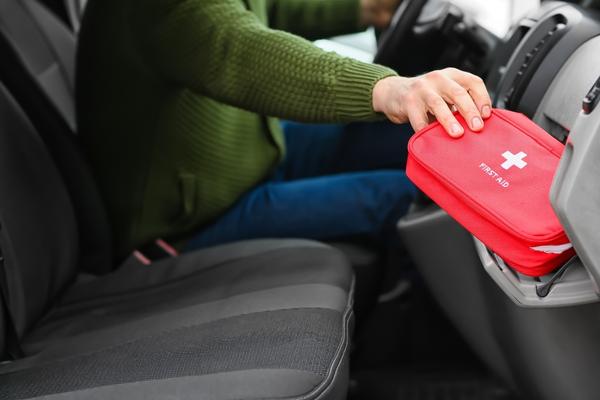
Or you can order a premade first aid kit made to fit in a glove compartment. There are a lot of things in this one that I wouldn’t think to include, and for the price, it all seems quite worth it.
In addition to these tips, it’s also important for your student to be aware of the emergency procedures for their dorm or apartment and for the campus. Please be sure your student is following their school social media account as well as any school safety/security accounts.
Do they know where do they go in the event of a severe weather event? Do they have a backup flashlight in the event their phone isn’t charged? Do they know who to call if they feel unsafe on campus?
Hopefully, this article has provided information and education to help college students prepare for a safe and fun college experience.
If you have additional ideas on improving dorm safety or safety in general for college students, please share them in the comments!
The Complete Dorm Essentials Guide – tested, trusted, non-toxic recommendations for dorm rooms.
How To Prepare And Pack For College Move In Day
Sentimental Gift Ideas Perfect For College Move In Day
Thank you for reading, and I hope you’ll share this article and our Facebook group with your dorm-bound friends! You can copy this link into text, email, your social media page, or a Facebook group. Thank you!
This article: https://thedormguide.com/tips-for-dorm-room-and-college-campus-safety

Affiliate Disclaimer: I only recommend products I do or would use myself. All opinions expressed are my own. I may receive a small commission, at no additional cost to you, for purchases made through the links in this post. Please see our full disclaimer for details.

Smart shopping, real advice, and the best deals—delivered.
FOLLOW US ON SOCIAL

Nipa | Fashionipa says:
This is such a comprehensive list! Our oldest just finished his first year of college and there are a few things here that we missed when we were helping him pack. Thanks for the safety tips 🙂 Nipa